
Trailer Weight Ratings: Every trailer type — from dump and gooseneck to utility and enclosed cargo — has its own empty weight, GVWR, and payload capacity. Knowing these numbers, and matching them to your truck's towing capacity, is the key to choosing the right trailer and hauling safely.
Ever wonder why two rigs that look nearly identical can carry such different loads?
The answer often comes down to weight ratings. Knowing them is key before you buy. Whether you're hauling heavy equipment, livestock, a boat, or camping gear, the right truck and trailer combo is crucial. It ensures every trip is smooth and safe, no matter where you're headed.
That number isn't just one figure, though. It includes empty capacity, cargo limits, and hitch requirements. Each factor changes based on the model you choose. From dump beds to gooseneck haulers, utility flatbeds, and enclosed cargo units, every style has its own specs to know.
That's why Silver Moon Trailers created this guide. We broke the specs down by category. This way, you can quickly find the details that fit your hauling needs.
Let's help you tow with confidence, starting with the basics you need before hitting the road.
Understanding Trailer Weight Terms You'll See When Shopping
When you visit a trailer lot, you'll see many weight terms on stickers and sheets. Dump trailers, equipment trailers, gooseneck models, utility trailers, and enclosed cargo units all have their own labels. These labels mean the same thing, but in different ways.
Learning these terms makes comparing trailers like Big Tex dump trailers and Sure-Trac equipment trailers easier. Silver Moon Trailers can help you understand any spec sheet. But first, let's cover the basics.
Curb Weight vs. Dry Weight vs. Tare Weight
Curb weight, dry weight, and tare weight all refer to the trailer's empty weight. This includes no cargo, water, or gear. The term used depends on the type of trailer you're looking at.
Dump and utility trailers often use "empty weight." Campers are listed as "dry weight." Enclosed cargo trailers show "tare weight." They all mean the same thing, just with different names.
GVWR and Payload Capacity Explained
GVWR, or Gross Vehicle Weight Rating, is the maximum weight your trailer can handle. This includes everything you load onto it. Going over this limit is illegal and can also void your warranty.
Payload capacity is simpler. It's the GVWR minus the empty weight. This tells you how much you can safely carry. It's also known as Cargo Carrying Capacity (CCC).
Silver Moon Trailers can help you understand these specs on any Big Tex, Sure-Trac, or Pace American trailer. This way, you'll know exactly what a sticker means.
| Term | What It Means | Common on These Trailers |
|---|---|---|
| Empty Weight | Trailer weight with no cargo, fluids, or gear | Dump, utility, and equipment trailers |
| Dry Weight | Same idea as empty weight, before fluids or cargo are added | Travel trailers and campers |
| Tare Weight | Factory weight of the trailer before any load is added | Enclosed cargo trailers |
| GVWR | Maximum legal weight of the trailer plus a full load | All trailer types |
| Payload Capacity (CCC) | GVWR minus empty or tare weight — your real hauling limit | All trailer types |
Trailer Weights by Trailer Type
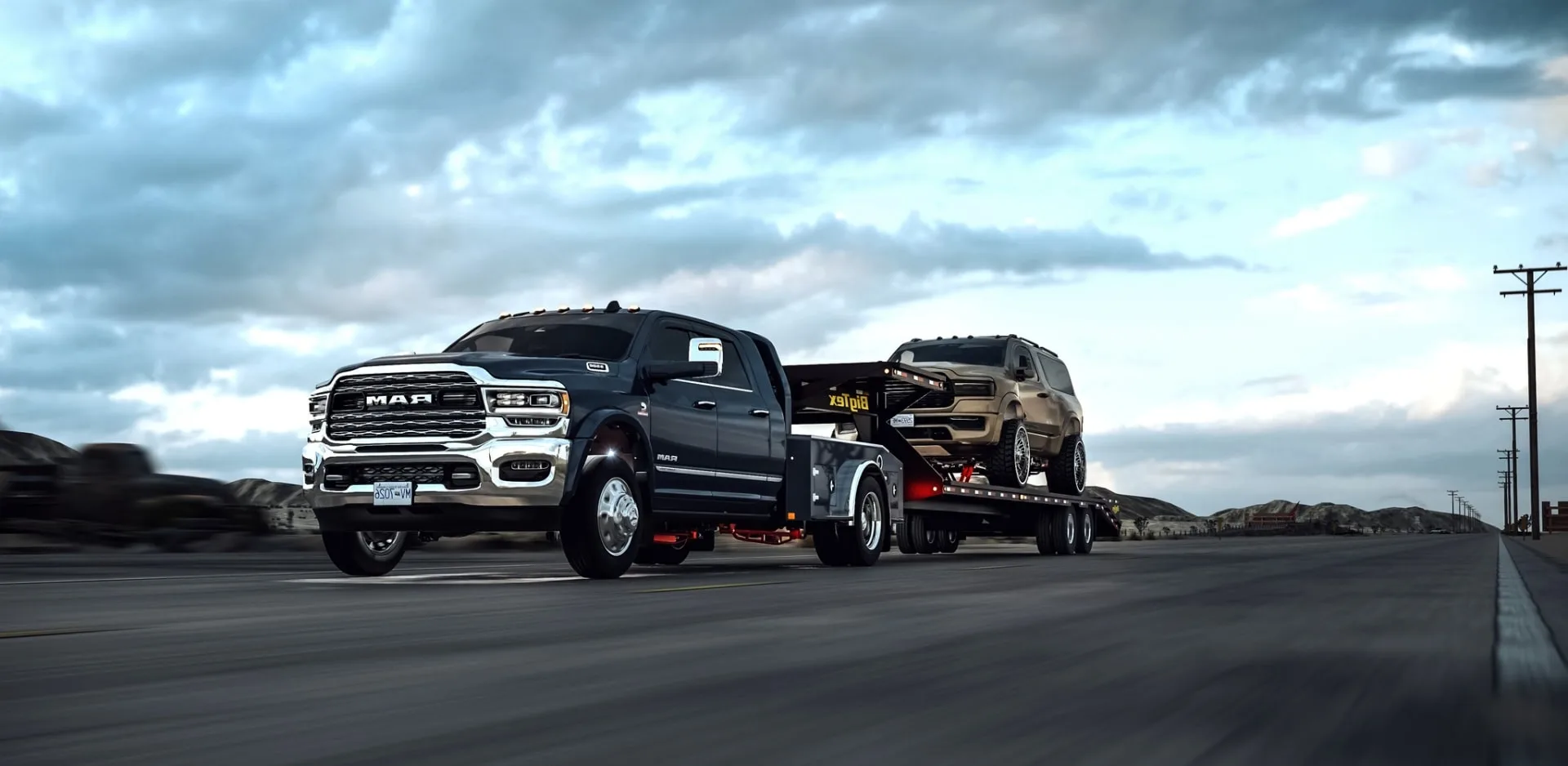
Numbers only tell half the story until you match them to the trailer sitting in your driveway. Each trailer type carries its own typical weight range. This is shaped by frame construction, axle count, and what it's built to haul.
Here's how trailer weights by trailer type stack up across the models Silver Moon Trailers stocks most often, starting with dump trailers and working through the lineup.
Dump Trailer Weight Ratings: Big Tex and Sure-Trac Dump Trailers
Big Tex and Sure-Trac dump trailer weight ratings scale with size and axle strength. A tandem-axle 7x14 dump trailer weighs about 2,120 lbs empty.
Payload capacity ranges from 4,880 lbs to 11,880 lbs depending on whether it rides on 3,500-lb or 7,000-lb axles. Heavier axle upgrades mean you can haul more material per trip.
Equipment Trailer Weight Ratings: Big Tex and Sure-Trac Equipment Trailers
Equipment trailer weight ratings from Big Tex and Sure-Trac follow the same axle logic. But these trailers are engineered for concentrated loads like skid steers and compact tractors.
A tandem-axle model built on 7,000-lb axles can carry payloads well above 10,000 lbs. That keeps your machine's weight safely inside GVWR limits.
Gooseneck Trailer Weight Capacity: Big Tex Gooseneck Trailers
Big Tex gooseneck trailer weight capacity jumps noticeably higher than bumper-pull models. Gooseneck construction spreads weight over the truck bed, which improves stability under heavy loads.
Loaded gooseneck trailers commonly exceed 10,000 lbs. That makes them the practical pick when you're hauling heavy equipment, multiple vehicles, or livestock loads that outgrow a standard tandem-axle trailer.
Utility Trailer Weight Capacity and Specifications: Big Tex Utility Trailers
Big Tex utility trailer weight capacity and specifications vary widely by size and axle setup. A single-axle 6x12 trailer weighs roughly 1,200 lbs empty with a 2,300-lb payload.
Larger tandem-axle models push payload capacity well above 10,000 lbs. The table below breaks down common configurations so you can see how empty weight and payload shift as size increases.
| Trailer Size | Axle Configuration | Empty Weight | Payload Capacity |
|---|---|---|---|
| 6x12 | Single, 3,500 lb | 1,200 lbs | 2,300 lbs |
| 7x14 | Tandem, 3,500-7,000 lb | 2,120 lbs | 4,880-11,880 lbs |
| 8.5x24 | Tandem, up to 7,000 lb | 3,600 lbs | Up to 10,400 lbs |
| 8.5x34 | Tandem, up to 7,000 lb | 4,800 lbs | Up to 9,200 lbs |
Enclosed Cargo Trailer Empty Weight: Pace American Cargo Trailers
Pace American enclosed trailer weight ranges from lightweight single-axle models built for small utility loads to heavier tandem-axle units made for bigger cargo runs.
Enclosed construction adds weight compared to open trailers. Checking cargo trailer empty weight against GVWR tells you exactly how much cargo capacity you have left to work with before you load up.
How Other Trailer Types Compare
Curious how trailers outside Silver Moon's lineup stack up? Here's a quick look at flatbed, travel, horse, and boat trailers for comparison — these aren't trailers we sell, but the numbers are useful context.
Flatbed Trailer Curb Weight and 20 ft Flatbed Trailer Weight
How much does a flatbed trailer weigh? It depends heavily on deck material and length. A 20 ft flatbed trailer weight typically falls between 2,500 and 4,500 lbs empty.
Steel-deck models run heavier than aluminum construction, and flatbed trailer curb weight climbs further with longer decks or dual-tandem axle setups.
Travel Trailer Dry Weight
Travel trailer dry weight spans a huge range. Smaller units under 25 ft often weigh 3,000 to 6,000 lbs dry, with GVWR between 5,000 and 8,500 lbs.
Larger 26-35 ft travel trailers run 6,000 to 10,000 lbs dry weight, with GVWR climbing as high as 14,000 lbs once fully equipped.
Horse Trailer Tare Weight
Horse trailer tare weight varies by size and build material. A basic single-horse aluminum trailer can weigh under 3,000 lbs, while two-horse trailers typically run 2,000 to 8,000 lbs.
Large multi-horse trailers with living quarters top out near 20,000 lbs once you add sleeping space and storage.
Boat Trailer Weight Limits
Boat trailer weight limits range from just 100 lbs for small single-boat trailers to over 4,400 lbs for trailers built to carry large yachts.
Factor in the boat itself, and loaded boat-and-trailer combinations can weigh anywhere from 900 lbs up to 35,000 lbs.
How to Match Trailer Weight to Your Truck's Towing Capacity
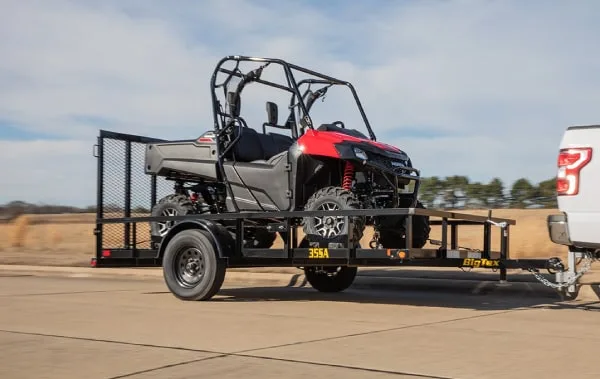
A truck might look strong, but it can still struggle with the wrong trailer. The numbers on your truck's sticker look good, but towing is more complex. Matching your trailer to your truck is easy once you know the numbers.
Calculating Your Total Towing Weight
First, find your trailer's GVWR on a metal plate near the frame. Then, check your truck's towing capacity and payload rating on the door-jamb sticker. These numbers are more accurate than what's advertised.
Estimate your tongue weight at 10 to 15 percent of your trailer's loaded weight. Use the 85 percent rule: keep your trailer at or below 85 percent of your truck's capacity. For example, a half-ton truck rated for 12,000 pounds should have a loaded trailer around 10,200 pounds.
| Truck Tow Rating (lbs) | 85% Safe Towing Weight (lbs) | Recommended Tongue Weight Range (lbs) |
|---|---|---|
| 8,000 | 6,800 | 680 – 1,020 |
| 10,000 | 8,500 | 850 – 1,275 |
| 12,000 | 10,200 | 1,020 – 1,530 |
| 15,000 | 12,750 | 1,275 – 1,912 |
Why Trailer Weight Affects Fuel Economy and Handling
Extra weight costs more than just towing. The U.S. Department of Energy says adding 100 pounds can cut fuel economy by up to 1 percent. Heavier trailers also make stopping harder and require earlier braking.
Tongue weight is crucial, too. If it's too low, the trailer sways. Load heavier items forward to keep the trailer straight.
If tongue weight is too high, a weight distribution hitch helps. Silver Moon Trailers can help you choose the right trailer for your truck.
Find Your Perfect Trailer Match at Silver Moon Trailers
Finding the right trailer means matching it to your truck's capacity. The team at Silver Moon Trailers is here to help. We'll guide you through the weight ratings of every trailer we offer.
Do you need a Big Tex dump trailer for cleaning up a job site? Or maybe a Sure-Trac equipment trailer for moving heavy machinery? Perhaps a Big Tex gooseneck for heavy loads, a Big Tex utility trailer for weekend tasks, or a Pace American enclosed cargo trailer to keep your stuff safe. We'll help you find the perfect match for your truck and budget.
Visit our lot at 1802 Dr. Martin Luther King Jr. Drive, Jonesboro, Arkansas 72401. See these trailers up close. Our team will check the specs and GVWR numbers to ensure your truck can handle the load safely.
Call us at 870-935-1645 to discuss your towing needs before you buy. Whether you're moving equipment locally or across the state, Silver Moon Trailers has the ideal trailer for you. Come visit us today and drive away with confidence.
FAQ
What's the difference between curb weight, dry weight, and tare weight?
These terms all mean the same thing: how much a trailer weighs when empty. The name changes based on the trailer type. For example, dump and utility trailers use "empty weight," campers and travel trailers say "dry weight," and enclosed trailers have "tare weight." Knowing this makes reading spec sheets easier.
What do GVWR and payload capacity actually mean?
GVWR is the max weight a trailer can handle, including cargo. Payload capacity is how much you can actually carry. It's GVWR minus the empty weight. If you're unsure, Silver Moon Trailers can help you understand these numbers.
How do I match a trailer's weight to my truck's towing capacity?
First, find the trailer's GVWR, not just its empty weight. Then, check your truck's towing capacity from the door-jamb sticker. Use the 85% rule for safety. For example, a half-ton truck can handle a 10,200-lb trailer comfortably.
Does trailer weight really affect fuel economy and handling?
Yes, it does. Extra weight means less fuel economy and harder handling. Load items forward and use a weight distribution hitch for better control.
Can Silver Moon Trailers help me figure out the right trailer weight for my truck?
Absolutely. The team at Silver Moon Trailers can help you find the right trailer for your truck. Visit 1802 Dr. Martin Luther King Jr. Drive, Jonesboro, Arkansas 72401, or call 870-935-1645 for assistance.